Amplicon sequencing is a widely used method for identifying and profiling microbial communities in complex samples. By targeting specific marker genes such as 16S rRNA (bacteria and archaea), 18S rRNA (eukaryotic microbes), and ITS regions (fungi), this approach enables microbial classification and diversity analysis.
During sequencing, targeted regions are amplified and analyzed using high-throughput platforms. The resulting data reveals microbial composition, community changes, and differences between experimental groups.
Traditional amplicon sequencing provides relative abundance information. However, absolute microbial quantification requires additional approaches to determine the actual number of microbial sequences present within a sample.
N2Jenomics Lab Pvt. Ltd. offers absolute quantitative 16S/18S/ITS amplicon sequencing using synthetic external standards. By adding known-copy-number reference sequences during library preparation, we generate standard curves to calculate the absolute abundance of microbial populations with improved accuracy.
Advantages of Absolute Quantitative Amplicon Sequencing
• Provides accurate absolute microbial abundance measurements
• Reduces bias caused by PCR amplification and sequencing variations
• Delivers more precise microbial community composition data
• Suitable for high-throughput microbial quantification studies
• Microbial population distribution and dynamics studies
• Functional and metabolic investigations
• Environmental microbiology research
• Ecological and evolutionary analysis
• Microbiome composition monitoring
Workflow
1. Sample Collection & DNA Extraction
• Microbial DNA is extracted from biological or environmental samples.
2. Target Amplification & Library Preparation
• Specific marker regions (16S, 18S, or ITS) are amplified with external standards added for quantification.
3. High-Throughput Sequencing
• Prepared libraries are sequenced using advanced sequencing platforms.
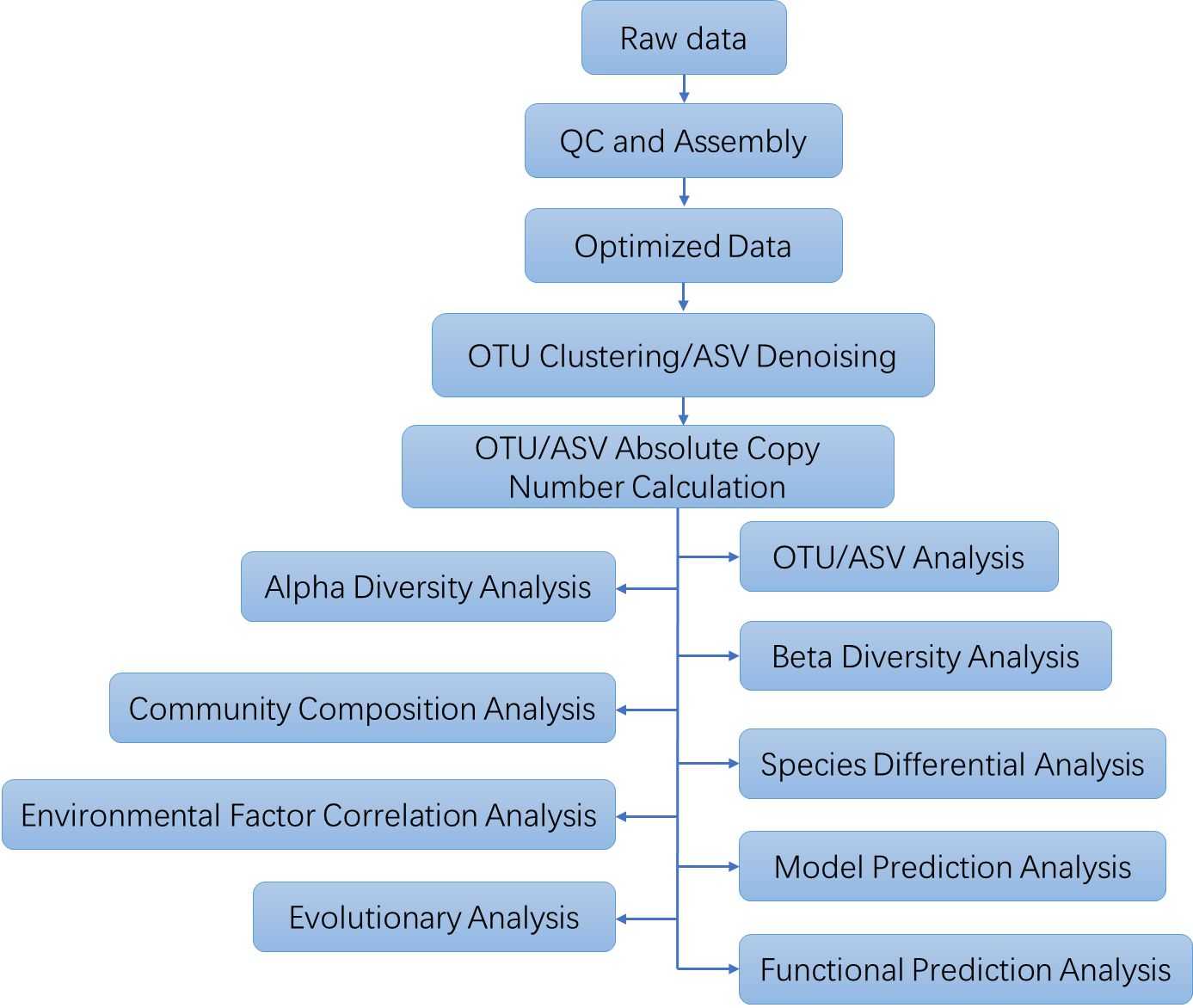
4. Bioinformatics Analysis
Data processing includes:
• Quality control and sequence filtering
• OTU/ASV generation
• Taxonomic classification
• Microbial diversity analysis
• Absolute abundance calculation
This approach provides reliable quantitative insights into microbial communities for environmental, agricultural, clinical, and biotechnology research.
Service Specifications
Sample Requirements
Sample type: regular soil samples and stool samples, other sample types need to be evaluated
Note: Sample amounts are listed for reference only. For detailed information, please contact us with your customized requests.
Sequencing Strategy
Recommended region: V3/V4/V3+V4/V4+V5
MiSeq PE250/PE300, HiSeq PE150 or MGI DNBSEQ-T7/DNBSEQ-G400
≥ 15W reads per sample
Bioinformatics Analysis
Filtering
Sequencing data QC
Reads assembling, obtain unique tags
OTU generation and statistical analysis
OTU quantification
Species composition analysis
Alpha diversity analysis
Beta diversity analysis
Diversity statistics
……
Advanced bioinformatic:
Meta analysis
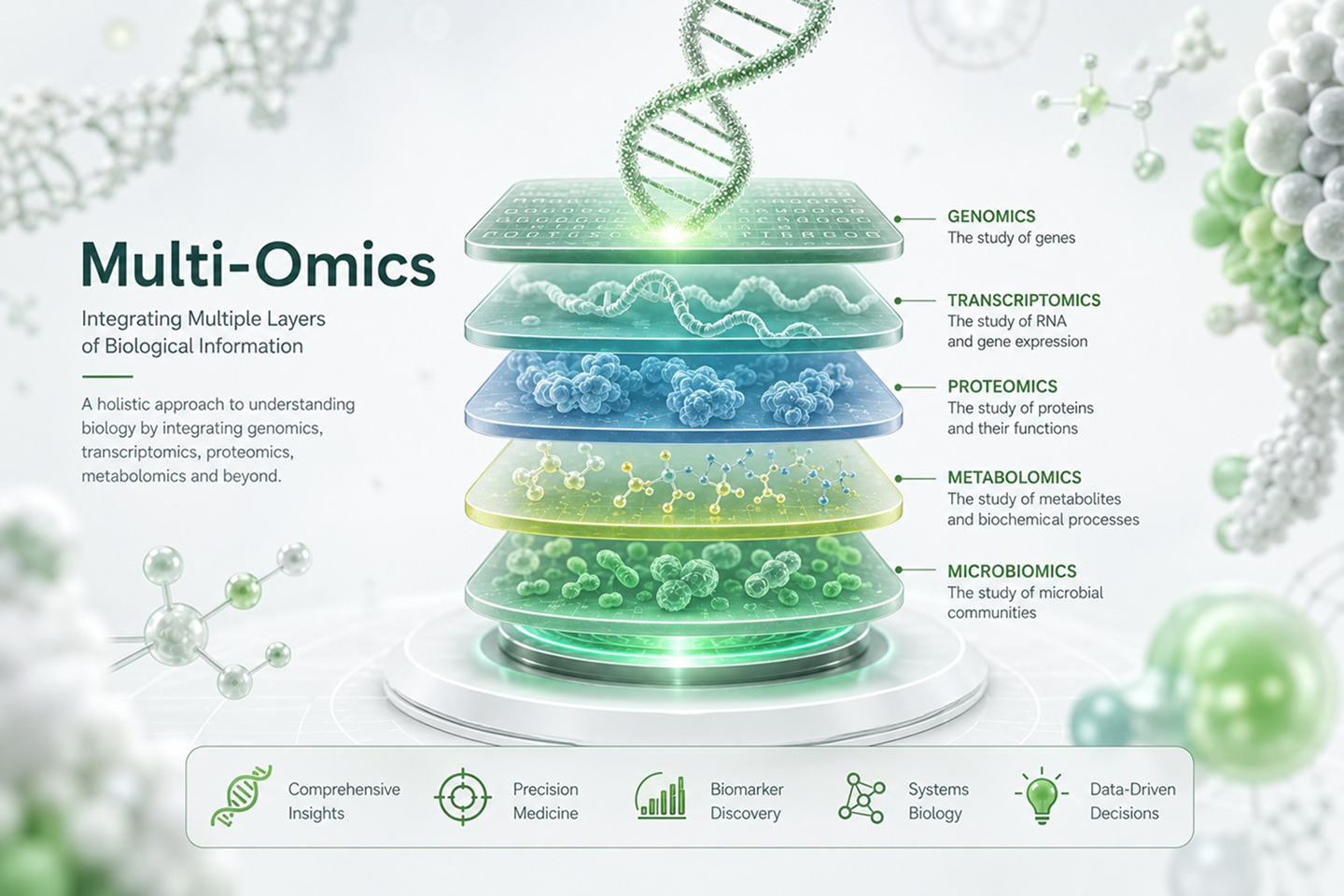
Multi-omics integration
Clustering algorithms
……
Note: Recommended data outputs and analysis contents displayed are for reference only. For detailed information, please contact us with your customized requests.
Analysis Pipeline
Deliverables
• The original sequencing data
• Experimental results
• Data analysis report
• Details in Absolute Quantitative 16s/18s/ITS Amplicon Sequencing for your writing (customization)
1. How is absolute quantitative amplicon sequencing different from traditional amplicon sequencing?
Traditional amplicon sequencing provides relative microbial abundance, which may not reflect actual microbial numbers. Absolute quantitative amplicon sequencing uses internal or external standards to calculate the true abundance of microbial taxa, providing more accurate community profiling.
2. What sample types can be analyzed?
This method is suitable for a wide range of samples, including:
• Soil and water
• Air samples
• Human and animal tissues
• Plant samples
• Environmental and industrial samples
3. What units are used for absolute quantification?
Absolute microbial abundance is commonly reported as:
• 16S copies per gram of sample
• 16S copies per nanogram of DNA
• Reporting copies per gram of sample is generally preferred because it better reflects the actual microbial load within the original sample.
4. What are OTUs and ASVs?
• OTUs (Operational Taxonomic Units) are groups of similar DNA sequences commonly clustered based on sequence similarity thresholds.
5. Why combine absolute quantification with metabolomics?
Absolute microbial quantification provides accurate species abundance, while metabolomics measures metabolite concentrations. Combining both datasets enables more reliable correlation analysis between microbial populations and their metabolic outputs, improving biological interpretation.
Absolute quantitative amplicon sequencing provides a more precise understanding of microbial communities by combining accurate abundance measurements with advanced sequencing and bioinformatics analysis.
Address:Registered Office: 138, Patparganj Industrial Area, New Delhi – 110092, India
Operational Address: National Institute of Plant Genome Research (BRIC - NGGF)
Lab No. 206 and 207, Aruna Asaf Ali Marg, P.O. Box No. 10531,
New Delhi – 110067, India