End-to-End Genotyping by Sequencing (GBS) Service – Scalable SNP Discovery for Complex Genomes
Genotyping-by-Sequencing (GBS) Services
Accelerate large-scale genetic studies with our high-throughput Genotyping-by-Sequencing (GBS) platform, designed for rapid and reliable SNP discovery and genotyping across hundreds to thousands of samples. Our GBS solutions support a wide range of applications, including Genome-Wide Association Studies (GWAS), molecular breeding, population genetics, diversity analysis, and research involving both model and non-model species.
At N2Jenomics Lab Pvt. Ltd., we combine advanced sequencing technologies with robust bioinformatics pipelines to deliver highly accurate, scalable, and cost-effective genotyping results, enabling researchers to generate comprehensive genomic insights with confidence.
Key Advantages
• High-Accuracy Genotyping for complex, diverse, and previously uncharacterized genomes.
• Suitable for Species Without a Reference Genome, making it ideal for non-model organisms.
• Comprehensive End-to-End Service, covering DNA quality assessment, library preparation, sequencing, SNP discovery, genotyping, and downstream bioinformatics analysis.
Genotyping-by-Sequencing (GBS) is a powerful Next-Generation Sequencing (NGS)-based technology that enables the simultaneous discovery and genotyping of thousands to millions of Single Nucleotide Polymorphisms (SNPs) across the genome. By combining genome complexity reduction with high-throughput sequencing, GBS provides an efficient and economical solution for large-scale genetic analysis.
GBS is particularly valuable for species with limited genomic resources and is well suited for projects that require scalable, high-throughput, and cost-effective SNP genotyping. Since the method can be applied with or without a reference genome, it has become a preferred approach for studying both model and non-model organisms.
Applications of GBS
Genotyping-by-Sequencing is widely used in a variety of genomic research areas, including:
• Genome-wide genetic mapping
• Genome-Wide Association Studies (GWAS)
• Population genetics and genetic diversity analysis
• Marker-assisted selection (MAS)
• Molecular breeding and crop improvement
• Evolutionary and conservation genomics
• QTL mapping and trait discovery
GBS Workflow
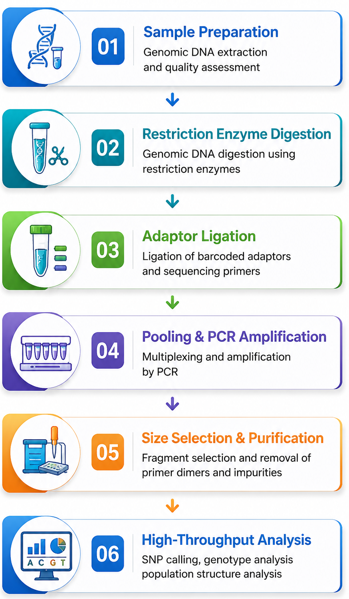
Our streamlined GBS workflow includes the following key steps:
• Genome Complexity Reduction using restriction enzyme digestion to target informative genomic regions.
• High-Throughput Sequencing on advanced Illumina platforms such as NovaSeq™.
• Bioinformatics Analysis, including quality control, sequence alignment (when applicable), SNP discovery, genotype calling, and comprehensive downstream data interpretation.
Why Choose Genotyping-by-Sequencing (GBS)?
Genotyping-by-Sequencing (GBS) has become one of the most widely adopted SNP genotyping technologies due to its ability to deliver high-throughput, accurate, and cost-effective genomic data. By combining genome complexity reduction with next-generation sequencing, GBS provides an efficient solution for large-scale genetic studies, molecular breeding, and research involving both model and non-model organisms.
• No Reference Genome Required
GBS can be successfully applied to species with limited or no available reference genome, making it an excellent choice for non-model organisms, newly sequenced species, and exploratory genomics projects.
• Cost-Effective Genotyping
By sequencing a reduced representation of the genome rather than the entire genome, GBS significantly lowers sequencing costs while maintaining high-quality SNP discovery and genotyping, making it an economical option for large population studies.
• High-Throughput Sample Processing
GBS enables the simultaneous analysis of hundreds to thousands of samples through multiplex sequencing, making it ideal for large-scale projects such as Genome-Wide Association Studies (GWAS), Quantitative Trait Loci (QTL) mapping, genomic selection, and molecular breeding programs.
• Genome-Wide SNP Discovery
Unlike fixed SNP arrays, GBS can identify both known and novel SNPs across the genome in a single experiment. The technology frequently captures variants within gene-rich regions, providing valuable markers for trait mapping and functional genomics research.
• Fast and Efficient Workflow
The simplified library preparation protocol and streamlined sequencing workflow reduce hands-on time while enabling rapid project completion. Combined with automated bioinformatics analysis, GBS delivers reliable results with faster turnaround times.
• Flexible Across Multiple Species
GBS is suitable for a wide range of organisms, including plants, animals, microbes, and other species with complex or poorly characterized genomes, making it a versatile solution for diverse genomic applications.
• Scalable Bioinformatics Analysis
Comprehensive downstream analysis—including quality control, SNP discovery, genotype calling, population structure analysis, and genetic diversity assessment—ensures that researchers receive actionable insights ready for further interpretation and publication.
GBS vs Other Genotyping Methods
Feature / Method
GBS
RAD-seq
ddRAD
Whole-Genome Resequencing
Library Prep
Simple, no fragment selection
Complex, size selection required
Dual enzyme cut + size selection
Whole-genome library
Reference Genome Needed
No
No
No
Yes
Input DNA Requirement
Low (≥100 ng)
Moderate
Moderate
High
Cost
Low
Medium
Medium to High
High
Coverage
Gene-rich, wide genome coverage
Near enzyme cut sites
More targeted
Entire genome
Best For
GWAS, breeding, population studies
Structure & diversity studies
Small genomes
Mutation & reference-based analysis
If you're seeking a budget-friendly, scalable, and standardized genotyping solution, GBS is the ideal choice for your next population-scale project.
GBS Service Workflow
From Sample Submission to Publication-Ready Genomic Insights
Our streamlined Genotyping-by-Sequencing (GBS) workflow is designed to ensure high-quality data generation, accurate SNP discovery, and comprehensive bioinformatics analysis. Every project is managed by experienced scientists using standardized protocols and rigorous quality control to deliver reliable, publication-ready results.
• Project Planning
Every project begins with a detailed consultation to understand your research objectives and experimental requirements.
- Scientific consultation and project discussion
- Technical feasibility assessment
- Experimental design and workflow planning
- Project scope and timeline confirmation
• Sample Reception & Quality Control
Upon sample arrival, our laboratory performs comprehensive quality assessment to ensure suitability for GBS library preparation.
- Sample registration and tracking
- DNA quantification
- DNA purity and integrity assessment
- Optional DNA extraction and purification services
• Library Preparation
High-quality genomic DNA is processed using optimized GBS protocols to generate sequencing-ready libraries.
- Genome complexity reduction using restriction enzyme digestion
- Barcode adapter ligation for sample multiplexing
- GBS library construction
- Library quality control and validation
• High-Throughput Sequencing
Prepared libraries are sequenced on advanced Illumina platforms to generate high-quality genomic data.
Sequencing Platforms
- Illumina NovaSeq™
- Illumina HiSeq™
Sequencing Configuration
- Paired-End 150 bp (PE150)
- Typical insert size: 250–350 bp
Recommended Data Output
≥3 Gb per sample for population genetics and diversity studies
≥10 Gb per sample for Genome-Wide Association Studies (GWAS) and high-resolution SNP discovery
• Bioinformatics Analysis & Data Delivery
Our experienced bioinformatics team processes sequencing data using validated analytical pipelines and delivers comprehensive, publication-ready results.
Deliverables include:
- Raw sequencing data (FASTQ format)
- Quality control (QC) reports
- Read processing and sequence alignment
- SNP discovery and genotype calling
- Population genetics and genetic diversity analysis
- Customized bioinformatics analysis based on project requirements
- Publication-ready reports and result interpretation
Applications of Genotyping-by-Sequencing (GBS)
• Advancing Research Across Agriculture, Healthcare, Animal Science, and Environmental Genomics
Genotyping-by-Sequencing (GBS) is a versatile and high-throughput genomic technology that supports a broad spectrum of research and industrial applications. Its ability to simultaneously discover and genotype thousands of SNPs makes it an invaluable tool for genetic mapping, population studies, molecular breeding, precision medicine, and biodiversity research.
• Crop Improvement & Plant Breeding
GBS accelerates modern breeding programs by enabling rapid identification of genetic markers associated with important agronomic traits.
Applications
- Variety identification through DNA fingerprinting
- Marker-assisted selection (MAS)
- Quantitative Trait Loci (QTL) mapping
- Identification of disease-resistant and drought-tolerant genes
- Hybrid purity testing
- Germplasm characterization and diversity analysis
- Genomic selection for crop improvement
• Population Genetics & Evolutionary Biology
GBS provides genome-wide genetic information for studying population structure, genetic diversity, and evolutionary relationships across natural populations.
Applications
- Genetic diversity assessment
- Population structure analysis
- Evolutionary and phylogenetic studies
- Conservation genomics for endangered species
- Identification of locally adapted populations
- Gene flow and migration analysis
• Biomedical & Human Genomics Research
High-density SNP genotyping generated by GBS supports disease genetics, biomarker discovery, and precision medicine research.
Applications
- Genome-Wide Association Studies (GWAS)
- Identification of disease-associated genetic variants
- Pharmacogenomics research
- Biomarker discovery and validation
- Cancer genomics and tumor heterogeneity studies
- Complex trait analysis
• Animal & Aquaculture Breeding
GBS enables genomic selection and marker-assisted breeding to improve productivity, health, and disease resistance in livestock and aquatic species.
Applications
- Disease resistance breeding
- Genomic prediction of economically important traits
- Parentage verification
- Feed efficiency optimization
- Growth and reproduction trait improvement
- Livestock and aquaculture genetic improvement
• Microbial & Environmental Genomics
GBS supports microbial diversity studies and environmental genomics by characterizing genetic variation across microbial populations.
Applications
- Functional profiling of microbial communities
- Comparative microbial genomics
- Pathogen surveillance and outbreak tracking
- Environmental biodiversity studies
- Ecological genomics research
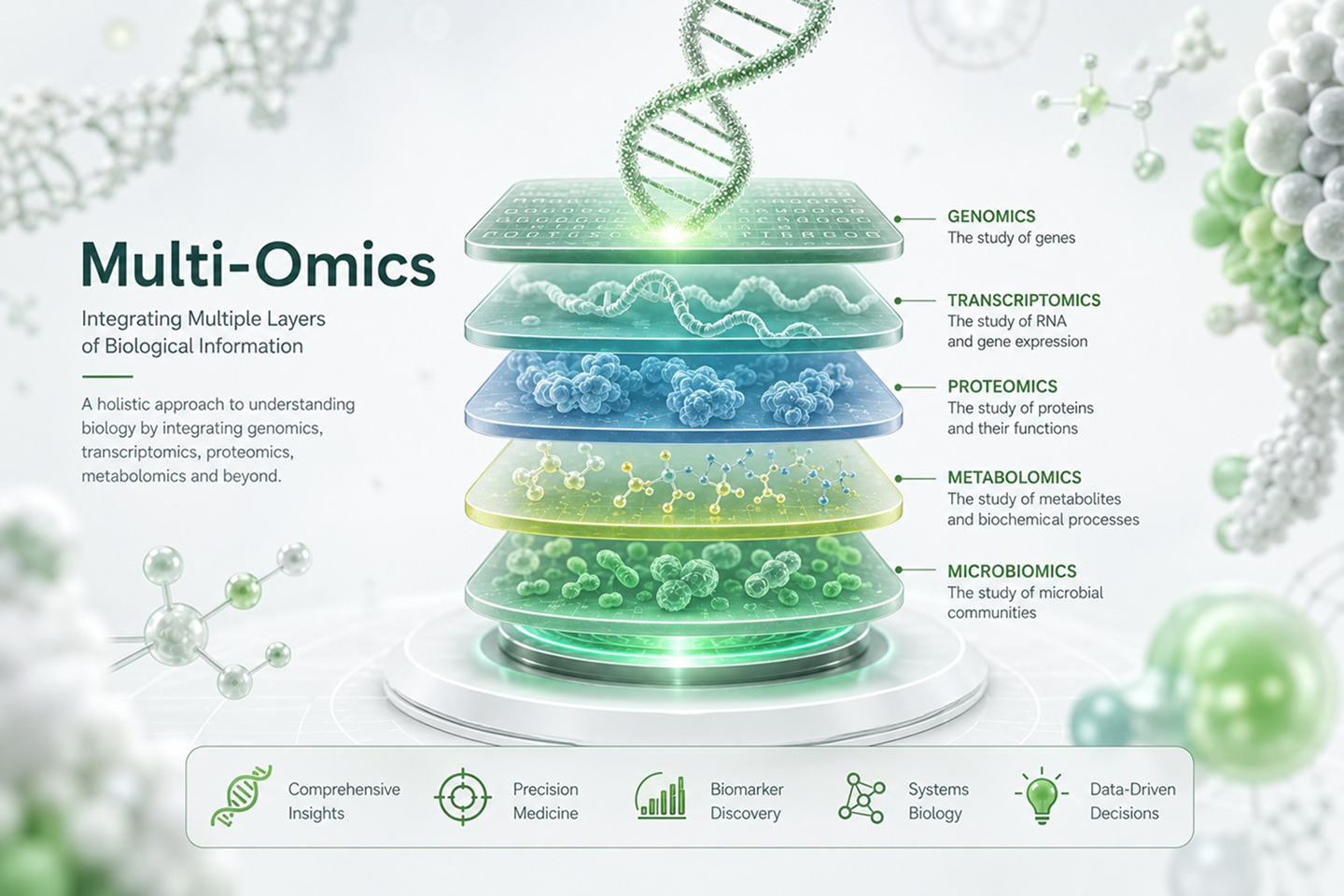
• Integrated Multi-Omics Solutions
For comprehensive biological insights, GBS can be integrated with complementary genomic technologies to provide a deeper understanding of complex biological systems.
Available Integrated Solutions
- GBS combined with 16S rRNA sequencing for microbial ecology studies
- SNP discovery integrated with transcriptomics and genome sequencing
- Rapid screening of antimicrobial resistance (AMR) markers
- Customized multi-omics bioinformatics workflows
Comprehensive Bioinformatics Services for GBS
At N2Jenomics Lab Pvt. Ltd., our GBS service extends beyond sequencing. We provide complete bioinformatics support—from raw sequencing data processing to advanced population genetics and variant analysis—using validated analytical pipelines to ensure accurate, reproducible, and publication-ready results.
Data Preprocessing & Quality Assessment
Our quality control pipeline ensures that only high-quality sequencing data proceeds to downstream analysis.
Services Include
- Adapter trimming and removal
- Low-quality read filtering
- Detection of sequencing contamination
- Base quality assessment (Q20/Q30)
- Read quality statistics and QC reporting
SNP Discovery & Sequence Alignment
We employ industry-standard software and optimized workflows for accurate variant identification.
Analysis Includes
- Read alignment to reference genomes using BWA or Bowtie2
- SNP and InDel discovery
- Variant calling using GATK, FreeBayes, or equivalent validated tools
- Variant filtering and quality assessment
- Functional annotation of genetic variants
- Comprehensive SNP summary statistics
Population Genetics Analysis (Optional)
For projects involving genetic diversity, breeding, or evolutionary studies, we offer advanced population genomic analyses.
Available Analyses
- Principal Component Analysis (PCA)
- Population structure analysis (STRUCTURE/ADMIXTURE)
- Phylogenetic tree construction
- Genetic distance matrix generation
- Linkage Disequilibrium (LD) analysis
- Genetic diversity and differentiation statistics
- Kinship and relatedness analysis
Customized Bioinformatics Solutions
Every research project has unique objectives. Our bioinformatics experts can design customized analytical workflows tailored to your study.
We provide support for:
- Genome-Wide Association Studies (GWAS)
- Quantitative Trait Loci (QTL) mapping
- Marker-assisted selection (MAS)
- Genomic prediction
- Comparative genomics
- Evolutionary genomics
- Publication-ready data visualization and reports
With advanced computational infrastructure, experienced bioinformaticians, and scalable analytical pipelines, N2Jenomics Lab Pvt. Ltd. delivers reliable, high-quality genomic insights that empower researchers, breeders, and industry partners to make informed scientific decisions.
Sample Requirements for GBS
Parameter
Specification
Sample type
Genomic DNA
Recommended input
≥300 ng
Minimum input
≥100 ng
DNA concentration
≥10 ng/μL
Purity (OD260/280)
1.8–2.0
Integrity
No degradation or visible impurities
RNA contamination
Must be removed via RNase treatment
📌 If your samples do not meet the recommended criteria, we also provide DNA extraction services. Please contact us to assess sample suitability or request detailed submission guidelines.
Why Choose N2Jenomics Lab Pvt. Ltd. for Your GBS Project?
At N2Jenomics Lab Pvt. Ltd., we combine advanced sequencing technologies, optimized laboratory workflows, and expert bioinformatics to deliver reliable, high-quality Genotyping-by-Sequencing (GBS) solutions. Our end-to-end service is designed to support projects of every scale—from small research studies to large population genomics and breeding programs.
• High-Accuracy SNP Genotyping
Our validated laboratory protocols and robust analytical pipelines generate highly accurate and reproducible SNP genotype data, ensuring confidence in downstream applications such as GWAS, QTL mapping, genomic selection, and population genetics.
• Scalable High-Throughput Processing
Whether your project includes a few hundred or several thousand samples, our high-throughput sequencing infrastructure efficiently processes large sample volumes while maintaining consistent data quality and rapid turnaround times.
• Cost-Effective Genomic Solutions
Our optimized GBS workflow minimizes sequencing costs without compromising data quality, providing an economical alternative for large-scale SNP discovery and genotyping projects.
• Complete End-to-End Project Management
We manage every stage of your project under one roof, including:
- Experimental design and scientific consultation
- DNA quality assessment
- Library preparation
- High-throughput sequencing
- SNP discovery and genotyping
- Comprehensive bioinformatics analysis
- Publication-ready reports and data delivery
This integrated approach simplifies project management and allows your research team to focus on biological interpretation rather than laboratory logistics.
• Flexible Bioinformatics & Customized Analysis
Every research project has unique objectives. Our experienced bioinformatics team develops customized analysis pipelines tailored to your specific requirements, including:
- SNP discovery and variant annotation
- Population genetics analysis
- Genome-Wide Association Studies (GWAS)
- QTL mapping
- Genetic diversity assessment
- Phylogenetic analysis
- Custom statistical reports and data visualization
• Fast Turnaround with Dedicated Scientific Support
Our streamlined workflows, experienced scientists, and responsive project management ensure timely project completion without compromising quality. Throughout your project, our technical experts provide dedicated guidance, regular progress updates, and post-analysis support to help you maximize the value of your genomic data.
• Trusted Partner for Genomics Research
With advanced sequencing platforms, rigorous quality control standards, and comprehensive bioinformatics expertise, N2Jenomics Lab Pvt. Ltd. is committed to delivering accurate, scalable, and publication-ready GBS solutions for researchers in agriculture, animal breeding, human genomics, environmental science, and precision medicine.
1. What is a GBS tag?
A GBS tag is a short DNA sequence generated adjacent to a restriction enzyme recognition site during Genotyping-by-Sequencing library preparation. Each tag represents a specific genomic region that is sequenced to identify genetic variants such as SNPs.
The overall genomic coverage depends on the number of tags, read length, and sequencing depth. Increasing the number of tags and sequencing depth generally improves SNP discovery and genotyping accuracy, making GBS suitable for a wide range of genetic studies.
2. How do I determine the appropriate number of GBS tags?
The optimal number of GBS tags depends on your research objectives, genome size, and the marker density required.
As a general guideline:
• Genome-Wide Association Studies (GWAS) typically require a large number of high-density SNP markers.
• Genetic linkage mapping generally requires a moderate marker density.
• Population genetics, diversity analysis, and phylogenetic studies may require fewer markers.
Our scientific team evaluates your project goals, genome characteristics, and sample size to recommend the most appropriate sequencing strategy and tag density for optimal results.
3. Can GBS be used for species without a reference genome?
Yes. One of the major strengths of GBS is that it can be successfully applied to non-model organisms and species without a fully assembled reference genome.
Reference-free analytical workflows allow researchers to discover and genotype SNPs across previously uncharacterized genomes. However, when a high-quality reference genome is available, additional analyses such as candidate gene identification, functional annotation, and genomic localization can be performed with greater precision.
4. Is GBS suitable for polyploid species?
Yes. GBS has been widely applied to polyploid organisms, including crops such as wheat, cotton, oats, potato, and other species with complex genomes.
Our bioinformatics workflows can be adapted to accommodate different ploidy levels, enabling accurate SNP discovery and genotype analysis in both diploid and polyploid species.
5. Can GBS be used for comparisons between different species?
GBS is most effective for within-species (intraspecific) studies where individuals share similar genomic architecture.
Although GBS can sometimes be applied to closely related species within the same genus, extensive genomic divergence may reduce the number of shared restriction sites and SNP markers. For interspecies studies, our experts can recommend the most appropriate sequencing strategy based on your research objectives.
6. Can GBS data be integrated with other omics technologies?
Yes. GBS data can be combined with multiple omics datasets to provide a more comprehensive understanding of complex biological traits.
Our integrated multi-omics solutions include:
• Expression Quantitative Trait Loci (eQTL) analysis using RNA-Seq data
• Integration with DNA methylation and epigenomics datasets
• Multi-omics biomarker discovery
• Functional genomics and pathway analysis
• Customized integrative bioinformatics workflows
7. My DNA samples do not meet the recommended quality or concentration. Can they still be used?
In many cases, yes.
Although high-quality DNA provides the best sequencing performance, our technical team can evaluate samples with lower concentration or variable quality to determine their suitability for GBS.
When necessary, we also provide:
• DNA extraction services
• DNA purification and clean-up
• DNA quantification and quality assessment
• Sample quality optimization before library preparation
8. Can I request sequencing without bioinformatics analysis?
Absolutely.
Our GBS services are fully modular, allowing you to select only the services you require.
Available options include:
• Library preparation only
• Library preparation + sequencing
• Sequencing with raw FASTQ data delivery
• Complete bioinformatics analysis
• Customized downstream data analysis
• This flexibility enables seamless integration with your existing research workflow.
9. Do you support large-scale GBS projects?
Yes.
Our laboratory is equipped with automated workflows and high-throughput Illumina sequencing platforms capable of processing hundreds to thousands of samples in parallel.
We routinely support large-scale projects involving:
• Genome-Wide Association Studies (GWAS)
• Population genomics
• Molecular breeding
• Genomic selection
• Genetic diversity analysis
• Agricultural and livestock improvement programs
10. What deliverables will I receive after completing a GBS project?
Depending on the selected service package, project deliverables may include:
• Raw sequencing data (FASTQ)
• Quality control (QC) reports
• Clean sequencing reads
• SNP and InDel variant files (VCF)
• Variant annotation reports
• Population genetics analyses
• Phylogenetic trees
• PCA and population structure analysis
• Linkage disequilibrium (LD) analysis
• Publication-ready figures, tables, and summary reports
11. Which research areas benefit most from GBS?
GBS is widely used across numerous disciplines, including:
• Plant and animal breeding
• Population genetics
• Evolutionary biology
• Conservation genomics
• Genome-Wide Association Studies (GWAS)
• QTL mapping
• Genetic diversity analysis
• Marker-assisted selection (MAS)
• Precision agriculture
• Functional genomics
Its flexibility, scalability, and cost-effectiveness make GBS one of the most widely adopted SNP genotyping technologies for modern genomics research.
Address:Registered Office: 138, Patparganj Industrial Area, New Delhi – 110092, India
Operational Address: National Institute of Plant Genome Research (BRIC - NGGF)
Lab No. 206 and 207, Aruna Asaf Ali Marg, P.O. Box No. 10531,
New Delhi – 110067, India