Long-Read Metagenomic Sequencing Services — Species-Level Resolution Without Assembly
N2Jenomics Lab Pvt. Ltd. offers Long-Read Metagenomic Sequencing using both PacBio HiFi and Oxford Nanopore platforms, enabling comprehensive characterization of complex microbial communities with exceptional resolution. Compared with conventional short-read metagenomics, long-read sequencing provides more complete genomes, improved taxonomic classification, enhanced functional annotation, and superior resolution of repetitive genomic regions.
PacBio HiFi sequencing generates highly accurate long reads, making it possible to achieve species- and strain-level microbial identification, recover high-quality metagenome-assembled genomes (MAGs), and accurately characterize functional genes. For applications requiring ultra-long reads, Oxford Nanopore sequencing complements HiFi by resolving large genomic regions, plasmids, operons, and structurally complex microbial genomes.
What We Offer
• High-Resolution Taxonomic Profiling
PacBio HiFi long reads enable accurate species- and strain-level microbial classification, providing greater taxonomic resolution than conventional short-read sequencing.
Traditional short-read shotgun metagenomic sequencing has transformed microbial community analysis, but short sequencing reads often produce fragmented assemblies, limit taxonomic resolution, and make it difficult to reconstruct complete genomes or complex genetic elements.
Long-read metagenomic sequencing overcomes these limitations by generating continuous DNA sequences that preserve genomic context. Using PacBio HiFi and Oxford Nanopore technologies, researchers can achieve more accurate microbial identification, recover higher-quality genomes, and better characterize functional genes within complex microbial communities.
• High-Resolution Taxonomic Identification
Long reads enable more accurate classification of microorganisms at the species and, in many cases, strain level.
- Improved identification of closely related microorganisms
- Greater confidence in microbial community profiling
- Reduced ambiguity compared with fragmented short-read assemblies
- Enhanced characterization of uncultured microorganisms
• Complete Functional Gene Context
Long reads can span entire functional genomic regions, allowing researchers to analyze genes within their native genomic environment.
- Biosynthetic gene clusters (BGCs)
- Antimicrobial resistance (AMR) genes
- Mobile genetic elements
- Plasmids and operons
- Virulence-associated regions
- Understanding complete gene context improves functional annotation and reveals relationships that are difficult to detect using short-read sequencing.
Applications of Long-Read Metagenomic Sequencing
Long-read metagenomics supports a wide range of research applications across environmental, agricultural, industrial, and biomedical sciences.
• Environmental Microbiology
Characterize complex microbial communities from diverse environments.
- Soil microbiome analysis
- Freshwater and marine microbiomes
- Sediment microbiology
- Extreme-environment microbial diversity
- Biogeochemical cycling studies
• Human Microbiome Research
Investigate microbial communities associated with human health and disease.
- Gut microbiome
- Oral microbiome
- Skin microbiome
- Vaginal microbiome
- Clinical microbiome research
- Host–microbe interaction studies
• Antimicrobial Resistance (AMR) Surveillance
Long-read sequencing improves characterization of antimicrobial resistance genes and their genomic context.
- AMR gene identification
- Plasmid-associated resistance analysis
- Mobile genetic element detection
- Resistance gene transmission studies
- Hospital and environmental surveillance
• Agricultural & Industrial Microbiology
Support microbial research for agriculture, biotechnology, and industrial applications.
- Fermentation microbiome optimization
- Plant growth-promoting microorganisms
- Rhizosphere microbiome studies
- Biocontrol organism identification
- Novel enzyme discovery
- Biosynthetic gene cluster characterization
Long-Read Metagenomic Sequencing Workflow
N2Jenomics Lab Pvt. Ltd. provides a complete end-to-end workflow for long-read metagenomic sequencing using PacBio HiFi and Oxford Nanopore platforms.
1. Sample Quality Assessment
- DNA concentration measurement
- Purity assessment
- High-molecular-weight DNA evaluation
- Optional host DNA depletion for appropriate sample types
2. Library Preparation
Library preparation is optimized according to the selected sequencing platform.
- PacBio SMRTbell® library construction
- Oxford Nanopore ligation or rapid library preparation
- Sample barcoding for multiplex sequencing when required
3. Long-Read Sequencing
Sequencing is performed using industry-leading long-read platforms.
• PacBio Platforms
- Sequel IIe
- Revio
• Oxford Nanopore Platforms
- PromethION
- GridION
Sequencing depth is optimized according to project objectives, including microbial profiling, genome recovery, comparative metagenomics, or functional analysis.
4. Data Processing & Quality Control
Comprehensive quality assessment includes:
- High-accuracy basecalling
- Read-length distribution
- Sequencing yield
- N50 statistics
- Read quality assessment
- Barcode balance (multiplex projects)
- Data integrity verification
5. Bioinformatics Analysis
Our comprehensive analysis pipeline includes:
- Species and strain-level taxonomic profiling
- Community composition analysis
- Functional annotation using KEGG, eggNOG, CAZy, and CARD
Clients receive a complete package of sequencing data and analysis results, including:
- Raw sequencing data (FASTQ)
- Alignment files (BAM) (optional)
- Quality control report
- Taxonomic abundance tables
- Functional annotation reports
- Metagenome-assembled genomes (FASTA) (optional)
- Comparative analysis results
- Publication-ready figures and visualizations
- Comprehensive bioinformatics report
Sample Requirements
To ensure optimal sequencing performance and accurate microbial profiling, we recommend submitting high-quality samples that preserve DNA integrity. Proper collection, storage, and transportation are essential for successful long-read metagenomic sequencing.
Sample Type
Recommended Input
Minimum Input
Sample Guidelines
Metagenomic DNA
≥2 μg (≥30 ng/μL)
≥1 μg
High-quality DNA with A260/280 of 1.8–2.0; RNase treatment recommended.
Soil / Sediment
≥6 g
≥2 g
Freeze immediately after collection and avoid repeated freeze–thaw cycles.
Fecal / Gut Contents
≥5 g
≥2 g
Collect in sterile containers and store at −80°C before shipment.
Water Filter Membranes
6 membranes
2 membranes
Use 0.22–0.45 μm filter membranes and store at −80°C.
Swab Samples
10–20 swabs
6 swabs
Transport using an appropriate nucleic acid preservation buffer.
Tissue Samples
≥2 g
≥1 g
Snap-freeze in liquid nitrogen immediately after collection.
Fermentation Samples
6–10 mL (pellet ≥2 g)
≥2 mL (pellet ≥1 g)
Ship the cell pellet on dry ice.
Sample Storage & Shipping
For the best sequencing results:
• Ship biological samples on dry ice (−80°C) whenever possible.
• Purified DNA samples may be shipped on ice packs or at −20°C, depending on transit time.
• Include sample collection date, DNA extraction method, and any known inhibitors or contaminants.
• Avoid repeated freeze–thaw cycles during storage and transport.
• Clearly label each sample with a unique sample identifier that matches the submitted sample information form.
Our technical team also supports low-biomass samples, host-rich specimens, FFPE materials, and other challenging sample types through customized workflows. For projects involving highly repetitive genomes or complex microbial communities, we also offer Oxford Nanopore Ultra-Long Sequencing as a complementary solution.
Bioinformatics Analysis
N2Jenomics Lab Pvt. Ltd. provides comprehensive bioinformatics analysis for both PacBio HiFi and Oxford Nanopore Long-Read Metagenomic Sequencing, transforming raw sequencing data into actionable biological insights.
Standard Analysis (Included)
Analysis Stage
Description
Read Processing
High-accuracy CCS read generation for PacBio HiFi or basecalling for Oxford Nanopore, followed by demultiplexing for multiplexed projects.
Quality Control (QC)
Assessment of sequencing yield, read-length distribution, N50, Q-score statistics, barcode balance, and overall data quality.
Taxonomic Profiling
Species- and strain-level microbial classification using optimized long-read analysis pipelines.
Functional Annotation
Annotation against widely used databases, including KEGG, eggNOG, CAZy, and CARD, to characterize metabolic pathways, enzymes, and antimicrobial resistance genes.
Microbial Community Analysis
Alpha diversity, beta diversity, differential abundance analysis, and microbial community composition profiling.
Optional Advanced Analysis
Additional analyses are available to support more specialized research objectives.
Analysis
Description
Metagenome-Assembled Genome (MAG) Reconstruction
Genome binning, assembly refinement, and quality assessment of recovered microbial genomes.
Comparative Metagenomics
Compare microbial communities across experimental groups, environmental conditions, locations, or time-series datasets.
Biosynthetic Gene Cluster (BGC) Prediction
Identification and annotation of secondary metabolite biosynthetic gene clusters for natural product discovery.
Custom Database Analysis
Annotation using user-provided reference databases or project-specific microbial collections.
Multi-Omics Integration
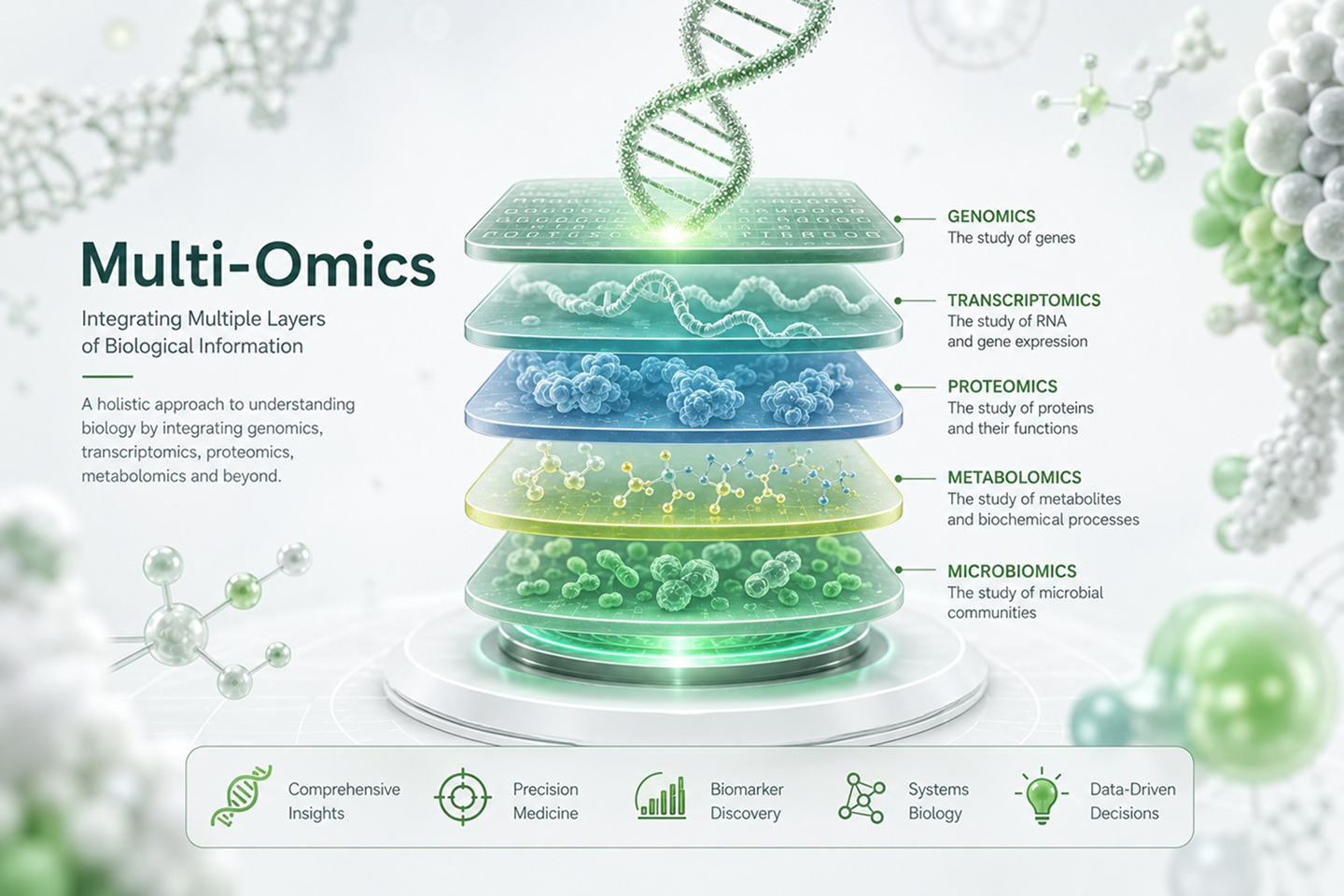
Integrate metagenomic sequencing with transcriptomic, metabolomic, proteomic, or other omics datasets for comprehensive biological interpretation.
Deliverables
Every Long-Read Metagenomic Sequencing project includes comprehensive sequencing data, bioinformatics analyses, and publication-ready reports to support downstream research and scientific publication.
Category
Deliverables
Raw Sequencing Data
High-quality PacBio HiFi or Oxford Nanopore sequencing reads in FASTQ format, with BAM files available where applicable. Multiplexed projects are delivered as demultiplexed datasets for each sample.
Species- and genus-level abundance tables, microbial composition summaries, interactive Krona visualizations, and publication-ready stacked bar charts.
Functional Annotation
Functional pathway analysis using KEGG, eggNOG/COG, CAZy, and CARD databases, including metabolic pathway reconstruction and antimicrobial resistance profiling.
Metagenome-Assembled Genomes (MAGs)(Optional)
High-quality MAG assemblies (FASTA), genome quality assessment, completeness and contamination statistics, and strain-level evaluation.
Comparative Analysis(Optional)
Alpha and beta diversity analyses, principal coordinate analysis (PCoA), NMDS plots, differential abundance analysis, clustering, and heatmaps for comparative microbiome studies.
Comprehensive Project Report
Detailed methodology, sequencing parameters, bioinformatics workflow, quality metrics, biological interpretation, and publication-ready figures and tables.
Long-Read vs. Short-Read Metagenomics
Selecting the appropriate sequencing platform depends on your research objectives, sample complexity, and desired taxonomic resolution. The comparison below highlights the strengths of the major metagenomic sequencing technologies.
Feature
Short-Read Sequencing
PacBio HiFi
Oxford Nanopore
Typical Read Length
Short paired-end reads
Highly accurate long reads (typically 10–25 kb)
Long reads from tens of kilobases to ultra-long reads
Per-Read Accuracy
Very high
Very high (HiFi consensus reads)
High and continually improving with modern chemistry and basecalling
Taxonomic Resolution
Generally genus-level for complex samples
Species- and frequently strain-level resolution
Species- and strain-level resolution with sufficient sequencing depth
Assembly-Free Classification
Limited
Excellent for many applications
Supported depending on sequencing depth and analysis strategy
- Accurate functional annotation with minimal assembly artifacts
• Choose Oxford Nanopore if you need:
- Ultra-long sequencing reads
- Real-time sequencing and rapid pathogen surveillance
- Complete plasmid and mobile genetic element characterization
- Resolution of large operons and complex genomic structures
• Choose a Hybrid PacBio HiFi + Oxford Nanopore Strategy if you need:
- Highly accurate microbial genome reconstruction
- Improved MAG completeness and structural resolution
- Comprehensive characterization of plasmids, bacteriophages, and repetitive genomic regions
- Maximum performance for highly complex microbial communities
• Choose Short-Read Metagenomics if your project primarily requires:
- Routine microbial community profiling
- Established short-read bioinformatics workflows
- Cost-effective genus-level taxonomic analysis
At N2Jenomics Lab Pvt. Ltd., we offer PacBio HiFi, Oxford Nanopore, and short-read metagenomic sequencing services. Our genomics specialists work closely with you to recommend the most suitable sequencing strategy based on your sample type, community complexity, research objectives, and desired biological resolution.
1. Why should I choose long-read metagenomic sequencing instead of short-read sequencing?
Long-read metagenomic sequencing provides significantly higher genomic resolution than conventional short-read approaches. Long reads enable species- and, in many cases, strain-level microbial identification, recover more complete metagenome-assembled genomes (MAGs), and preserve the genomic context of operons, plasmids, antimicrobial resistance genes, and biosynthetic gene clusters. In contrast, short-read sequencing often produces fragmented assemblies and may have limited taxonomic resolution for complex microbial communities.
2. Which platform is better for metagenomics: PacBio HiFi or Oxford Nanopore?
Both technologies offer unique advantages, and the best choice depends on your research objectives.
• PacBio HiFi provides highly accurate long reads, making it ideal for species- and strain-level taxonomic profiling, high-quality MAG reconstruction, and comparative metagenomic analyses.
• Oxford Nanopore generates ultra-long reads that are particularly valuable for resolving plasmids, mobile genetic elements, large biosynthetic gene clusters, and structurally complex genomes. It also supports real-time sequencing applications.
Our experts can recommend the most appropriate platform—or a hybrid PacBio HiFi and Oxford Nanopore strategy—based on your project requirements.
3. Can long-read sequencing identify microorganisms without genome assembly?
Yes. High-quality long reads often contain sufficient genomic information for direct taxonomic classification, enabling accurate species- and strain-level identification without relying entirely on genome assembly. This reduces assembly-related biases and improves taxonomic confidence for many microbial communities.
4. What sample types do you accept?
We accept a wide range of sample types, including:
• Soil and sediment
• Water filtration membranes
• Fecal and gut-content samples
• Swab specimens
• Plant and animal tissues
• Fermentation samples
• Purified metagenomic DNA
If you have low-biomass samples, FFPE materials, or other challenging specimens, our technical team can recommend customized sample preparation strategies.
5. How much sequencing data is recommended per sample?
The required sequencing depth depends on sample complexity and study objectives. Species-level microbial profiling generally requires moderate sequencing depth, while recovery of high-quality metagenome-assembled genomes (MAGs) from complex microbial communities typically benefits from deeper sequencing. During project planning, our scientists will recommend an appropriate sequencing strategy based on your samples and research goals.
6. What bioinformatics analyses are included?
Our standard bioinformatics workflow includes:
• Quality control and read processing
• Species- and strain-level taxonomic profiling
• Functional annotation using KEGG, eggNOG, CAZy, and CARD
• Alpha and beta diversity analysis
• Differential abundance analysis
• Publication-ready visualizations and comprehensive reports
• Optional advanced analyses include metagenome-assembled genome (MAG) reconstruction, comparative metagenomics, biosynthetic gene cluster prediction, antimicrobial resistance analysis, custom database annotation, and multi-omics data integration.
7. Can PacBio HiFi and Oxford Nanopore sequencing be combined in one project?
Yes. A hybrid sequencing strategy can leverage the strengths of both platforms. PacBio HiFi provides highly accurate taxonomic profiling and high-quality MAGs, while Oxford Nanopore contributes ultra-long reads for resolving plasmids, repetitive regions, mobile genetic elements, and complex genome structures. Hybrid workflows are particularly valuable for challenging microbial communities and comprehensive genome characterization.
8. How is long-read metagenomic sequencing different from 16S amplicon sequencing?
16S amplicon sequencing targets only a single marker gene and is primarily used for microbial community profiling. In contrast, long-read metagenomic sequencing analyzes all DNA within a sample, enabling species- and strain-level taxonomic identification, genome reconstruction, metabolic pathway analysis, antimicrobial resistance gene detection, biosynthetic gene cluster identification, and comprehensive functional characterization from a single experiment.
Address:Registered Office: 138, Patparganj Industrial Area, New Delhi – 110092, India
Operational Address: National Institute of Plant Genome Research (BRIC - NGGF)
Lab No. 206 and 207, Aruna Asaf Ali Marg, P.O. Box No. 10531,
New Delhi – 110067, India