Nanopore Targeted Sequencing Service to Detect SNVs, SVs, and Epigenetics
When your research focuses on specific genes, genomic regions, or microbial targets, targeted sequencing provides deep, high-confidence coverage without the expense and complexity of whole-genome sequencing. N2Jenomics Lab Pvt. Ltd. offers comprehensive Nanopore Targeted Sequencing services that combine long-read sequencing with flexible target enrichment strategies, including amplicon sequencing, CRISPR-Cas9 enrichment, and adaptive sampling.
Our long-read workflows overcome many limitations of conventional targeted sequencing by minimizing amplification bias, eliminating dependence on hybridization probes, and preserving valuable structural and epigenetic information. This enables simultaneous detection of single nucleotide variants (SNVs), structural variants (SVs), repeat expansions, DNA methylation, and other genomic features within a single experiment.
Whether you are investigating disease-associated genes, validating genome editing, profiling microbial pathogens, or studying complex genomic regions, our end-to-end solution delivers reliable sequencing, advanced bioinformatics, and publication-ready results for researchers in academia, biotechnology, pharmaceutical organizations, and CROs.
Key Advantages -
• Deep, targeted coverage of genomic regions of interest with long-read sequencing.
• Multiple enrichment options, including amplicon sequencing, CRISPR-Cas9 enrichment, and adaptive sampling.
• Comprehensive variant detection, including SNVs, indels, structural variants, repeat expansions, and DNA methylation.
• Real-time adaptive sampling for PCR-free enrichment without additional laboratory processing.
• Integrated bioinformatics analysis with high-quality reports, data visualization, and publication-ready deliverables.
• Customized workflows designed to meet diverse research objectives across genomics, microbiology, oncology, agriculture, and biomedical research.
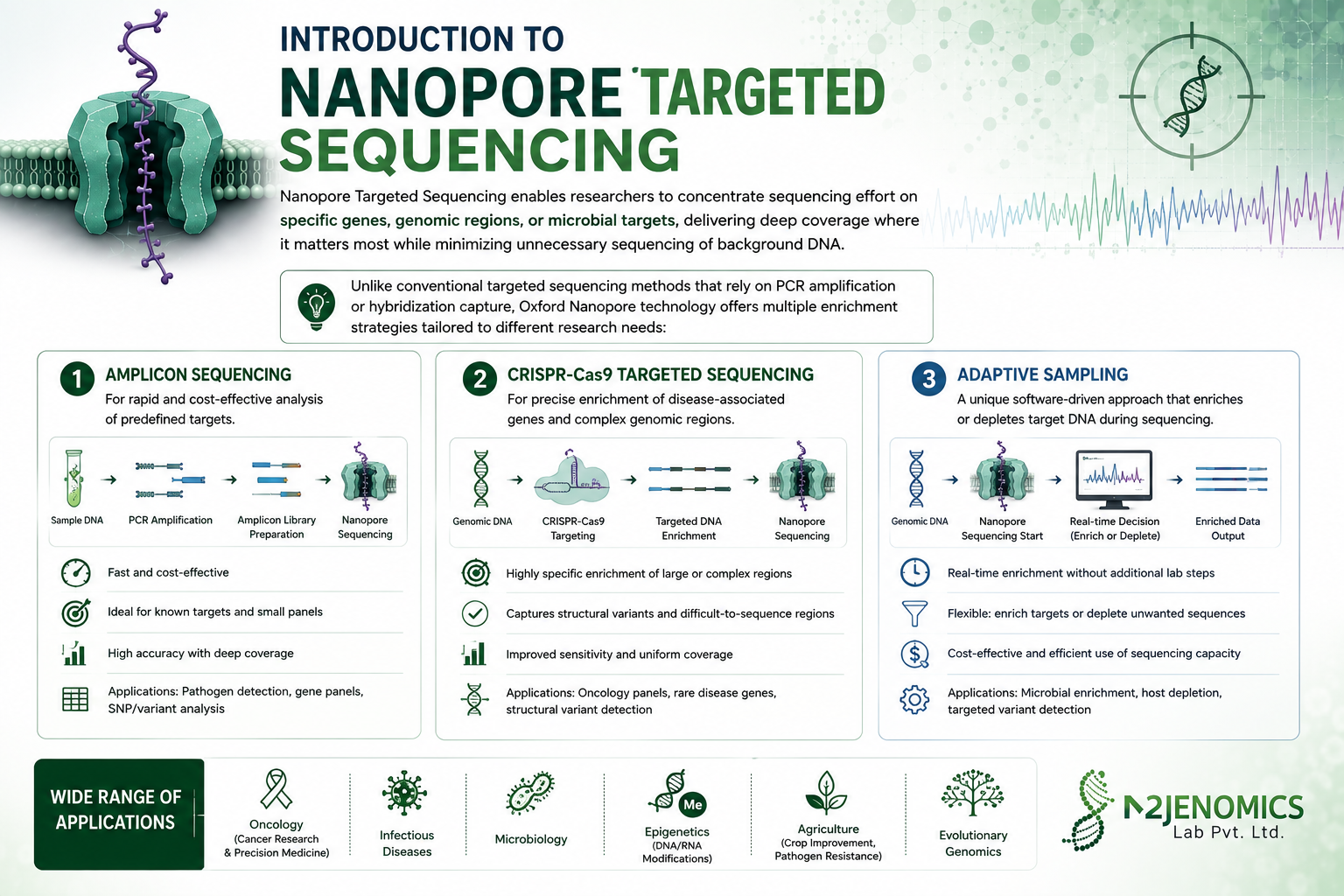
Nanopore Targeted Sequencing enables researchers to concentrate sequencing effort on specific genes, genomic regions, or microbial targets, delivering deep coverage where it matters most while minimizing unnecessary sequencing of background DNA.
Unlike conventional targeted sequencing methods that rely on PCR amplification or hybridization capture, Oxford Nanopore technology offers multiple enrichment strategies tailored to different research needs:
• Amplicon Sequencing for rapid and cost-effective analysis of predefined targets.
• CRISPR-Cas9 Targeted Sequencing for precise enrichment of disease-associated genes and complex genomic regions.
• Adaptive Sampling, a unique software-driven approach that enriches or depletes target DNA during sequencing without additional laboratory enrichment steps.
These flexible workflows make Nanopore Targeted Sequencing an excellent choice for applications in oncology, infectious diseases, microbiology, epigenetics, agriculture, and evolutionary genomics.
Why Choose Nanopore Targeted Sequencing?
• Long-Read Coverage of Complex Regions
Generate reads ranging from hundreds of bases to ultra-long fragments, enabling accurate analysis of structural variants, repetitive sequences, GC-rich regions, and difficult-to-sequence genomic loci.
• Native DNA & Epigenetic Analysis
Sequence native DNA or RNA without extensive amplification, preserving DNA methylation and other base modifications for comprehensive genetic and epigenetic studies.
• Real-Time Target Enrichment
Adaptive sampling selectively enriches or rejects DNA molecules during sequencing, improving efficiency and reducing turnaround time without additional wet-lab processing.
• Flexible & Cost-Effective Workflows
Choose the enrichment strategy that best matches your project, eliminating the need for expensive capture panels while reducing hands-on time and experimental complexity.
Technology Comparison
Feature
Nanopore Targeted Sequencing
Nanopore Whole-Genome Sequencing
Illumina Targeted Sequencing
Read length
Long to ultra-long
Long to ultra-long
Short
Variant detection
SNVs, indels, SVs, repeat expansions, methylation
Genome-wide variant discovery
Primarily SNVs and small indels
Epigenetic analysis
Native DNA methylation supported
Native DNA methylation supported
Requires additional workflows
Real-time sequencing
Yes
Yes
No
PCR amplification
Optional
No
Typically required
Portability
High
High
Laboratory-based
Throughput
Moderate
Moderate
High
Best suited for
Targeted genomic analysis
Whole-genome studies
Large targeted cohorts
Service Packages
N2Jenomics Lab Pvt. Ltd. offers multiple Nanopore Targeted Sequencing workflows designed to accommodate different research objectives, sample types, and budgets.
• Amplicon Sequencing — Ideal for a small number of well-defined targets requiring rapid, cost-effective analysis.
• CRISPR-Cas9 Targeted Sequencing — Recommended for structural variants, repetitive regions, and preservation of epigenetic information.
• Adaptive Sampling — Best for flexible targeting, host DNA depletion, and metagenomic studies.
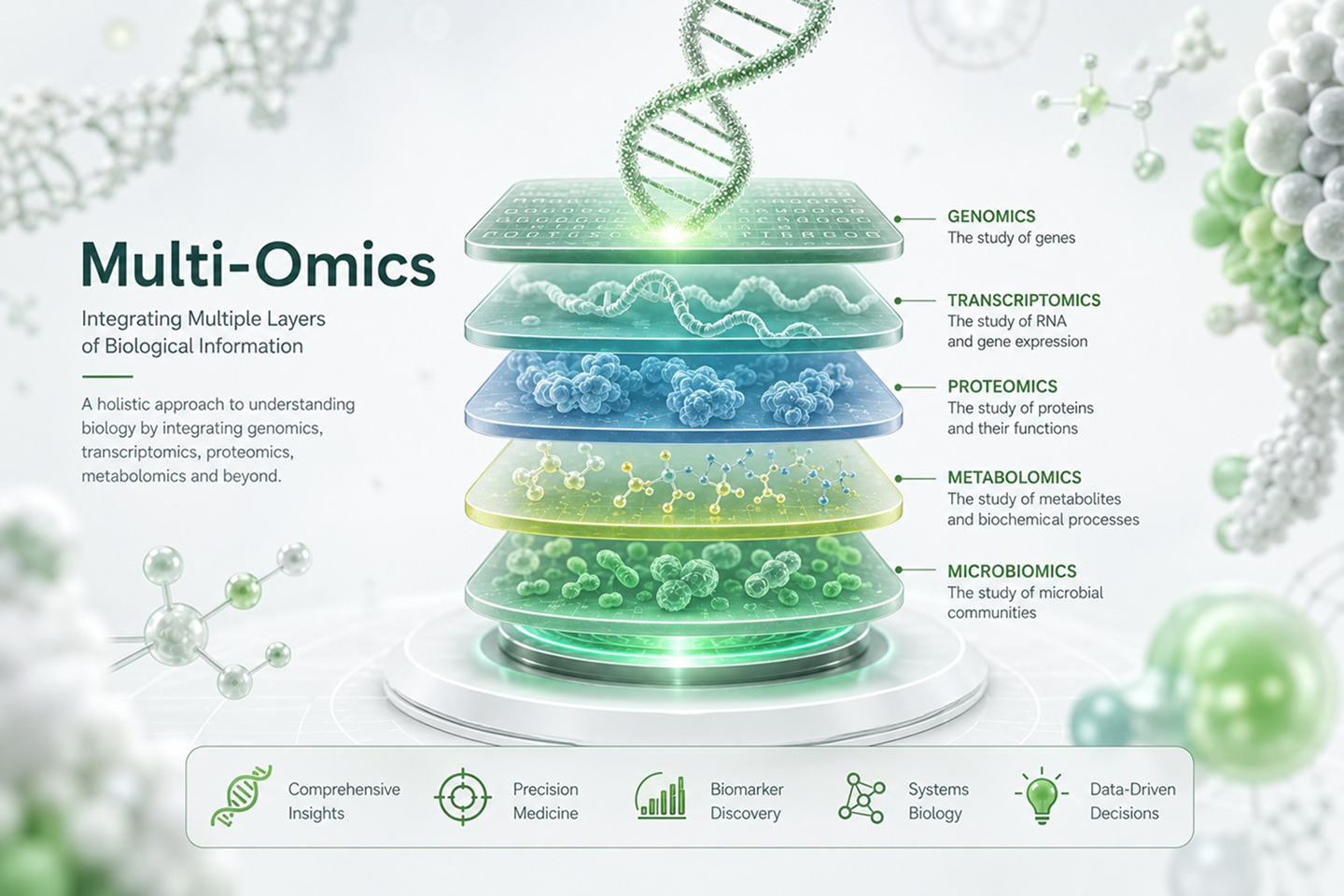
• Comprehensive Multi-Omics — Designed for projects requiring integrated analysis of sequence variants, structural variation, methylation, and haplotypes.
Applications
• Cancer Genomics
- Detection of structural variants and complex genomic rearrangements
- Targeted methylation profiling
- Hereditary cancer gene panel analysis
- Haplotype phasing and allele-specific studies
• Antimicrobial Resistance
- Detection of antimicrobial resistance genes (ARGs)
- Characterization of plasmids and mobile genetic elements
- Surveillance of resistance gene transmission
• Microbiome & Metagenomics
- Host DNA depletion for improved microbial sequencing
- Enrichment of rare microbial species and functional genes
- Recovery of near-complete microbial genomes
• Epigenetics
- Direct DNA methylation analysis
- Promoter and enhancer profiling
- Repeat element and imprinting studies
• Ancient DNA & Forensic Research
- Analysis of degraded or limited DNA samples
- Mitochondrial genome enrichment
- Species identification and forensic marker analysis
• Synthetic Biology
- Validation of CRISPR genome editing
- Verification of engineered pathways and synthetic constructs
- Characterization of large DNA insertions and artificial chromosomes
Workflow
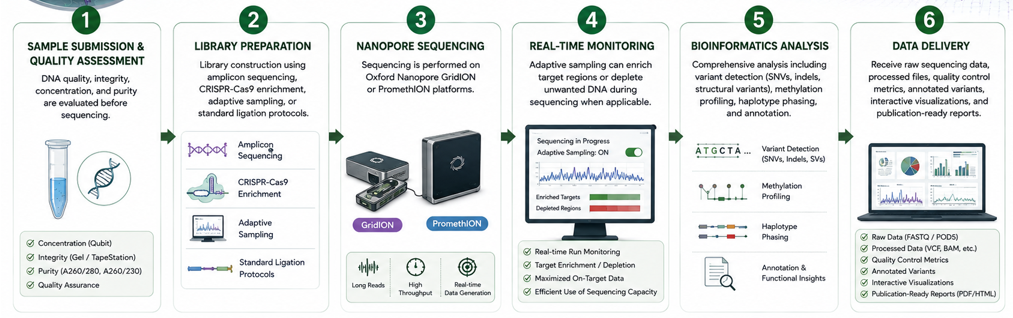
1. Sample Submission & Quality Assessment
DNA quality, integrity, concentration, and purity are evaluated before sequencing.
2. Library Preparation
Library construction using amplicon sequencing, CRISPR-Cas9 enrichment, adaptive sampling, or standard ligation protocols.
3. Nanopore Sequencing
Sequencing is performed on Oxford Nanopore GridION or PromethION platforms.
4. Real-Time Monitoring
Adaptive sampling can enrich target regions or deplete unwanted DNA during sequencing when applicable.
5. Bioinformatics Analysis
Comprehensive analysis including variant detection (SNVs, indels, structural variants), methylation profiling, haplotype phasing, and annotation.
6. Data Delivery
Receive raw sequencing data, processed files, quality control metrics, annotated variants, interactive visualizations, and publication-ready reports.
N2Jenomics Lab Pvt. Ltd. provides comprehensive Nanopore Targeted Sequencing solutions backed by advanced long-read sequencing technology, experienced scientists, and robust bioinformatics support. From project planning to final data delivery, we ensure reliable, high-quality results tailored to your research objectives.
• Multi-Platform Sequencing Expertise
Our team has extensive experience across Oxford Nanopore, PacBio, and Illumina platforms, enabling us to recommend the most suitable technology for every project.
• Trusted CRO-Grade Quality
We support researchers from academic institutions, biotechnology companies, pharmaceutical organizations, and CROs with reproducible workflows and stringent quality standards.
• Customized Targeted Sequencing Solutions
Whether your project involves a single gene, a custom panel, antimicrobial resistance genes, or comprehensive cancer panels, we design workflows that meet your scientific and budget requirements.
• Advanced Bioinformatics Analysis
Our bioinformatics team provides end-to-end analysis, including variant detection, structural variant analysis, methylation profiling, antimicrobial resistance (AMR) gene identification, functional annotation, and comprehensive reporting.
• Complete End-to-End Support
From sample quality assessment and library preparation to sequencing, bioinformatics, and secure data delivery, we provide dedicated technical support throughout your project.
Sample Requirements
Recommended Sample Types
Sample Type
Recommended Input
Minimum Input
Quality Requirements
Sample Handling
High-molecular-weight genomic DNA
≥5 µg
≥3 µg
OD260/280: ~1.8; OD260/230: 2.0–2.2; high purity
DNA fragments ≥30 kb preferred; minimal degradation; store in Tris or TE buffer
Microbial or environmental DNA
≥500 ng
300–500 ng
≥10 ng/µL; inhibitor-free
Freeze or stabilize before shipment; adaptive sampling recommended for host-contaminated samples
Tissue or cultured cells
Sufficient to obtain high-quality genomic DNA
As much as available
High-purity, intact DNA
Fresh or snap-frozen samples preferred; avoid repeated freeze–thaw cycles
Sample Storage & Shipping Guidelines
To preserve DNA integrity and maximize sequencing performance, we recommend the following:
• Store DNA in RNase-free water, TE buffer, or 10 mM Tris (pH 8.0–8.4).
• Avoid buffers containing detergents, surfactants, or high concentrations of EDTA.
• Ship samples with ice packs or dry ice whenever possible to maintain sample quality.
• Use secure, leak-proof sample tubes (1.5 mL microcentrifuge tubes are recommended) or properly sealed plates.
• Clearly label each sample on both the tube cap and side, ensuring labels exactly match the submission form.
Quality Control Requirements
Before sequencing, samples should meet the following quality criteria:
• DNA Purity: OD260/280 approximately 1.8 and OD260/230 between 2.0–2.2.
• DNA Integrity: High-molecular-weight DNA with minimal degradation.
• DNA Concentration: Quantified using fluorescence-based methods (such as Qubit) for optimal accuracy.
• Sample Quantity: Sufficient input DNA according to the selected targeted sequencing workflow.
Sample Submission
To ensure efficient project processing, please include the following with your shipment:
• Completed Sample Submission Form
• Sample IDs that exactly match the labels on all tubes
• Sample type and project information
• DNA concentration and purity measurements
• Available quality control data (e.g., Qubit concentration, OD ratios, fragment size profile or gel image)
• Providing complete sample information helps our team perform accurate quality assessment and select the most appropriate sequencing workflow for your project.
1. What is Nanopore Targeted Sequencing, and how does it differ from whole-genome sequencing?
Nanopore Targeted Sequencing focuses on specific genes, genomic regions, or loci of interest rather than sequencing the entire genome. This approach provides higher sequencing depth, faster analysis, and lower costs for targeted studies while retaining the advantages of long-read sequencing, including structural variant detection and native DNA modification analysis.
2. What targeted sequencing strategies are available with Oxford Nanopore technology?
We offer multiple enrichment approaches to suit different research objectives:
• Amplicon Sequencing for targeted PCR products and microbial marker analysis.
• CRISPR-Cas9 Targeted Sequencing for amplification-free enrichment of specific genomic regions.
• Adaptive Sampling for real-time enrichment or depletion of target sequences during sequencing without additional wet-lab enrichment. Our team can recommend the most appropriate workflow based on your project requirements.
3. How does Nanopore Amplicon Sequencing differ from other targeted sequencing methods?
Amplicon sequencing is a rapid and cost-effective approach for well-defined targets. However, PCR-based enrichment may introduce amplification bias and does not preserve native DNA modifications. CRISPR-Cas9 enrichment and adaptive sampling avoid PCR, maintain epigenetic information, and provide superior characterization of structural variants and complex genomic regions.
4. What are the advantages of CRISPR-Cas9 enrichment compared with hybrid capture?
CRISPR-Cas9 enrichment is a probe-free, amplification-free method that generates long sequencing reads, making it well suited for repetitive regions, structural variants, and methylation analysis. Hybrid capture is effective for broad gene panels but generally requires probe design, additional laboratory steps, and may be less effective for resolving complex genomic structures.
5. Can Nanopore Targeted Sequencing detect DNA methylation and other epigenetic modifications?
Yes. Amplification-free workflows such as CRISPR-Cas9 enrichment and adaptive sampling preserve native DNA, allowing direct detection of DNA methylation and selected base modifications without additional chemical conversion or specialized library preparation.
6. Can low-input or partially degraded DNA be used?
Yes. Project feasibility depends on the enrichment strategy and DNA quality. Amplicon sequencing is generally more tolerant of fragmented DNA, while CRISPR-Cas9 enrichment and adaptive sampling perform best with high-quality, high-molecular-weight DNA. Our scientists can recommend the most suitable workflow for challenging samples.
7. What are the advantages of Nanopore Targeted Sequencing over short-read methods?
Nanopore sequencing provides long-read coverage, enabling accurate detection of structural variants, repeat expansions, haplotypes, and complex genomic rearrangements. It also preserves native DNA modifications, which are typically not captured by conventional PCR-based or short-read sequencing workflows.
8. What sample quality is recommended?
For optimal results, we recommend high-molecular-weight genomic DNA with minimal degradation, OD260/280 of approximately 1.8, OD260/230 between 2.0–2.2, and sufficient DNA concentration. Specific input requirements vary depending on the selected sequencing workflow.
9. Which Oxford Nanopore platform is best for targeted sequencing?
Platform selection depends on project size and throughput requirements. MinION is suitable for smaller targeted studies, while GridION and PromethION are ideal for larger projects, higher sample throughput, and multiplexed sequencing. Our team selects the most appropriate platform based on your study design.
10. What is adaptive sampling, and how does it work?
Adaptive sampling is a real-time target enrichment technology available on Oxford Nanopore platforms. During sequencing, the instrument evaluates DNA molecules as they enter the nanopore and selectively continues sequencing target fragments while rejecting non-target molecules. This enables enrichment without additional laboratory enrichment steps.
11. Which types of genetic variants can be detected?
• DNA methylation and other native base modifications
• Haplotype phasing for long genomic regions
12. What bioinformatics analysis and deliverables are included?
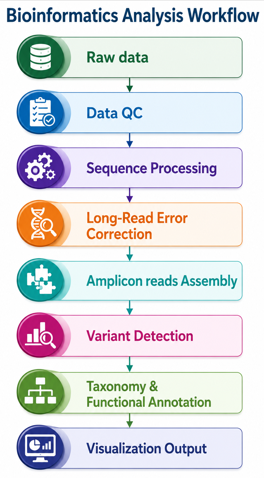
Our end-to-end bioinformatics service includes quality assessment, sequence alignment, variant detection, structural variant analysis, optional methylation profiling, functional annotation, and comprehensive reporting. Standard deliverables include FASTQ, BAM, VCF, quality control metrics, coverage statistics, annotated variant reports, publication-ready figures, and a detailed analysis report tailored to your research objectives.
Address:Registered Office: 138, Patparganj Industrial Area, New Delhi – 110092, India
Operational Address: National Institute of Plant Genome Research (BRIC - NGGF)
Lab No. 206 and 207, Aruna Asaf Ali Marg, P.O. Box No. 10531,
New Delhi – 110067, India